Loading...
Serving Windsor, CA and surrounding areas. (707) 687-4808
Your home or ADU needs a foundation built for Sonoma County's clay soils and seismic zone. We handle the excavation, forming, steel, permit process, and inspections - all in one place.
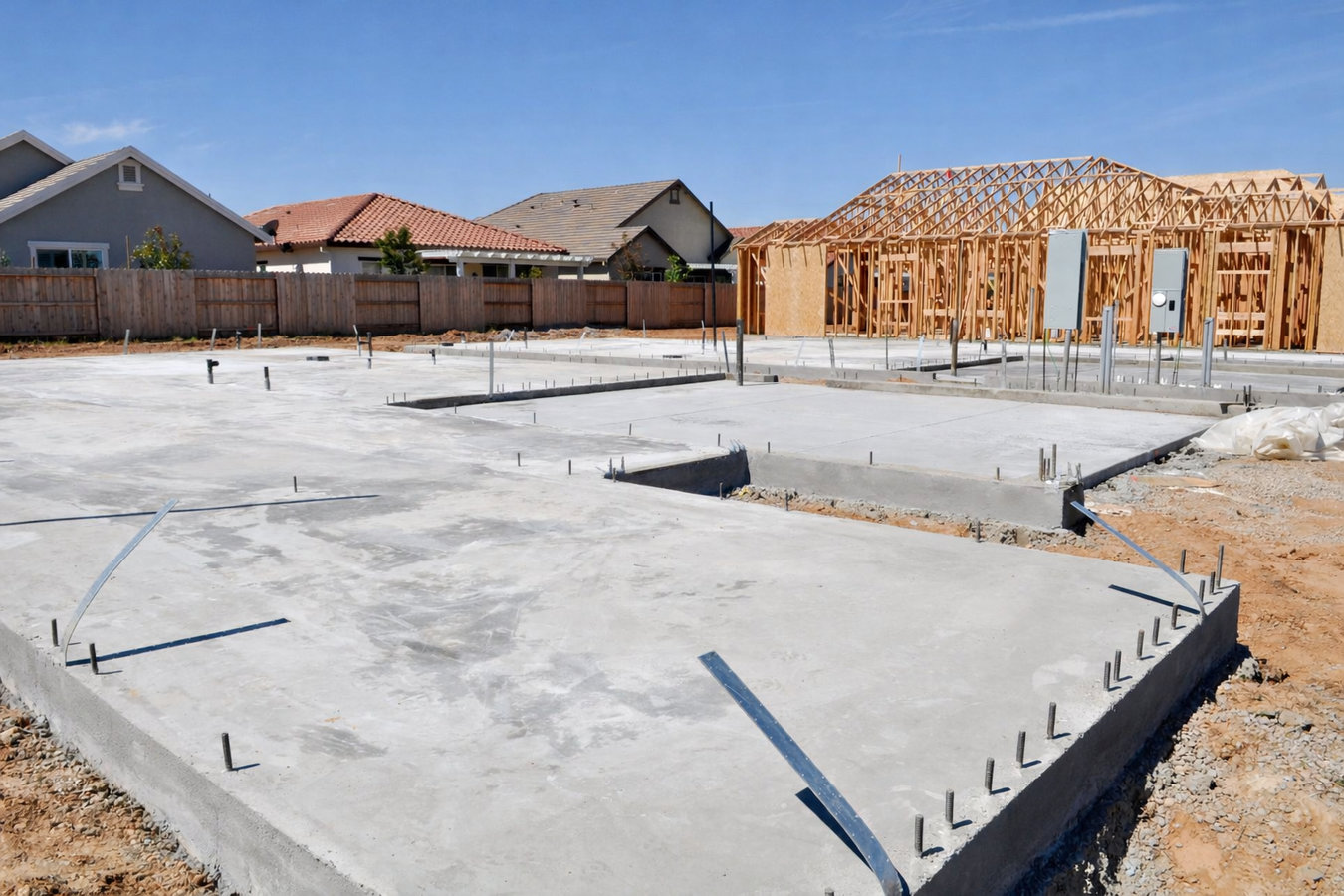
Foundation installation in Windsor involves excavating the site, setting forms to shape the concrete, placing steel reinforcing bars, pouring and curing the concrete, and passing required inspections - most residential foundation projects take one to two weeks of active work, though the full timeline from permit application to framing-ready is typically three to six weeks.
In Windsor and throughout Sonoma County, the foundation is the one part of your home you genuinely cannot go back and fix without major disruption and expense. Problems discovered years after a poor pour - settling, cracking, moisture intrusion - cost far more to address than they would have cost to prevent. The permit and inspection process exists precisely because the reinforcement and forms are correct when they are buried in concrete - there is no way to verify them after the pour without breaking through the slab. A contractor who pulls permits and welcomes inspections is a contractor whose work can be verified.
Foundation installation often connects directly with concrete parking lot building on commercial or multi-unit projects, and with foundation raising when an existing structure needs to be lifted before a new foundation is poured beneath it.
Any new construction - a full home, a room addition, or an accessory dwelling unit - requires a proper concrete foundation before framing can begin. Windsor has seen significant ADU activity as homeowners add space without moving, and foundation installation is typically the first major construction step in that process.
When a structural engineer assesses a foundation as failed or structurally inadequate - particularly in older homes with significant settling or earthquake damage - replacement is often the right answer. Patching a foundation that has fundamentally moved is typically a temporary fix that delays a more expensive repair later.
Garages, workshops, and outbuildings in Windsor sometimes sit on inadequate slabs or no proper foundation. Converting that space into livable area - a home office, guest room, or ADU - typically triggers a foundation requirement in the permit process. This is one of the more common reasons for foundation work in established Windsor neighborhoods.
Real estate transactions in the Windsor area frequently surface foundation issues during inspection, particularly in homes built before modern seismic and soil standards. Whether you are a buyer wanting the problem resolved or a seller trying to address it before closing, we can assess what is needed and provide a clear scope of work.
Every foundation we install in Windsor starts with a site visit, a review of your plans or scope, and a written estimate that accounts for excavation depth, reinforcement requirements, and the permit process. We handle the permit application, coordinate the required pre-pour inspection, and stay on site through the pour and the start of curing. For residential projects, we work with your architect or engineer on the drawings and can help coordinate soils reports if they are not already in hand.
For projects that need both a slab floor and raised perimeter foundation elements, we coordinate with slab foundation building as part of the same project scope, keeping the schedule and oversight in one place. The American Society of Concrete Contractors sets the industry standards our work is built around - ascconline.org has resources for homeowners who want to understand what best practice looks like before hiring.
Full installation for new homes and ADUs, from excavation through final inspection - suits ground-up construction on cleared lots.
Foundations for room additions, detached garages, and permanent outbuildings - suits homeowners expanding an existing property.
Demolition and full replacement of a failed or structurally inadequate foundation - suits older homes or structures where repair is no longer the right answer.
Structural perimeter elements designed to transfer loads from walls into the ground - suits raised-floor and post-and-beam construction types.
Windsor sits on the Santa Rosa Plain, where expansive clay soils are one of the dominant forces acting on any foundation. These soils absorb winter rain and swell, then dry out and shrink in summer - that seasonal movement is the main reason foundations in this area shift and crack when they were not designed for it. A soils report is typically required as part of the Sonoma County permit process for this reason: it tells the structural engineer what the ground under your specific lot can actually support. Seismic considerations add a second layer of specificity. The North Bay region sits in an area of meaningful seismic activity, and California's building code requires foundation reinforcement designed for those forces. That means more steel, specific anchor bolt placements, and inspection checkpoints that verify the requirements were met before the concrete covered them up.
The dry season - roughly April through October - is the practical window for most foundation pours in Windsor. Excavating and pouring in saturated soil during the wet season is possible but creates real complications with mix quality and curing. We serve homeowners across Windsor and in nearby Kenwood and Sonoma, where the same soil conditions and seismic requirements shape every foundation project.
We visit your property to assess the site, review your plans or scope, and discuss the project timeline. We reply within one business day and provide a written estimate that covers excavation, materials, labor, and permit fees - no verbal quotes that change later.
We submit the permit application with the engineering drawings and soils report to the local permitting authority. Plan review typically takes two to four weeks - we track the status and keep you updated so the project does not stall at the building department.
Once permits are approved, we excavate to the required depth, set forms, and place all steel reinforcement. The building inspector visits before any concrete is ordered to confirm the setup matches the approved plans - this step is required and cannot be skipped.
After the inspection sign-off, we pour the concrete and protect it during curing. Forms are stripped once the concrete reaches working strength. A final inspection confirms the completed foundation meets the approved plans, and then the next phase of your project can begin.
We handle permits, soils coordination, and inspections - call for a free on-site estimate and a clear timeline before you commit to anything.
(707) 687-4808We submit applications, track plan review status, and schedule every required inspection - including the pre-pour visit that confirms steel and forms are correct before concrete goes in. Homeowners who have tried to manage this themselves know how much time it takes to chase permits while a project sits waiting.
The expansive clay soils on the Santa Rosa Plain are a known driver of foundation movement. We account for local soil behavior in every project - proper excavation depth, gravel drainage layers, and reinforcement calibrated to the conditions under your specific lot - not a generic pour that ignores what is in the ground.
The North Bay's seismic environment requires foundation reinforcement that exceeds what lower-risk states require. Every foundation we install is built to California's requirements for this region and verified by the required pre-pour inspection - so you have a documented record that the work was done correctly, not just a contractor's word.
California requires a state contractor's license for foundation work. Ours is active and in good standing - you can verify it yourself at cslb.ca.gov in about two minutes. We encourage every homeowner to check any contractor's license before signing - it is the simplest way to confirm the basics are in order.
Foundation installation done right means your home, ADU, or addition stands on a base that was designed for the ground it sits on, reinforced for the seismic zone it is in, and documented through every required inspection. That record protects you at every stage of ownership - when you refinance, when you sell, and every day in between.
Commercial and multi-unit concrete parking areas built to handle vehicle loads, drainage requirements, and permit compliance.
Learn MoreLift and level a structure before a new foundation is poured beneath it - often the first step before a full foundation replacement.
Learn MoreDry-season schedules fill quickly - call now to lock in your start date and we will handle permits, inspections, and everything in between.